
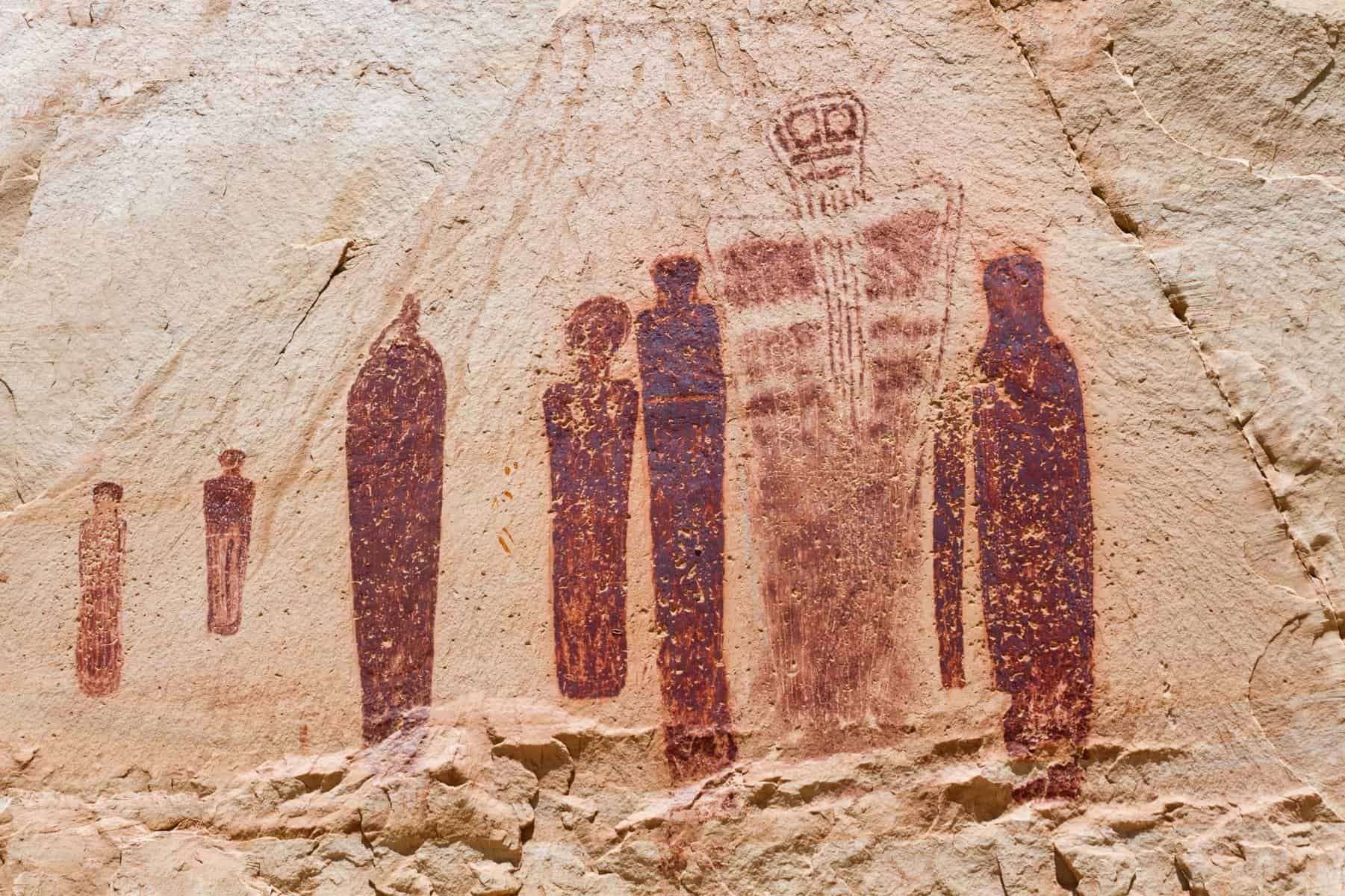
Last year, during a research trip to create this class, I discovered The Great Gallery. I had never heard about it before, and it captivated me.
The art, the history, the outstanding rarity of this display immediately drew me in. We were in Canyonlands National Park, I had my camera, and I was ready to hike!
As I always suggest to others, we first stopped at the visitor center to run our plans by the park ranger. And she said, “No way.”
Even though our kids were with us, we are all experienced hikers. The day was cool and beautiful. But the park ranger warned us that the hike is far more treacherous than reviews suggest.
Additionally, Google Maps had told us that the drive to the trailhead would be about two hours. The ranger said it was actually about a five hour drive each direction.
While hiking the trail to visit The Great Gallery remains high on my list of personal goals, that day, we listened to the park ranger. We will do more research and make a new plan. For now, however, I will continue my study of these pictographs and share their value below.
What is The Great Gallery?
The Great Gallery pictographs in Canyonlands National Park are considered to be among the finest examples of rock art in the world. It is a large panel of rock art located in Horseshoe Canyon, a tributary of Canyonlands National Park. The panel features numerous life-sized pictographs, or rock paintings, created by the Barrier Canyon Culture around 2,000 years ago.
Where is The Great Gallery?
The Great Gallery is in Hoseshoe Canyon which is a remote and detatched region of Canyonlands National Park in Utah. Most people drive to this trailhead from Moab.
What is essential to know is that GPS will often tell visitors that the drive is only around two hours in length; however, the park ranger as well as locals have told us that the drive actually takes closer to five hours. This is largely due to the trailhead for the access hike being off of a dirt road that is prone to washing out.
In fact, when we tried to rent a Jeep to drive out to this hike, the rental company told us that they no longer permitted renters to take their vehicles to that part of Horseshoe Canyon. He said he had to make too many rescues, and he had witnessed too much vehicular damage from the rough roads.
The Great Gallery Hike
The hike to The Great Gallery is just under 11.5 miles round-trip. There is no consistent water source, so the park service recommends that visitors take at least one gallon of water per person.
There are some ranger-led hikes to this site during the spring and fall season. The park discourages people from taking this hike in the summer. It is a site of numerous rescues and a handful of deaths.
Why is The Great Gallery Important?
What makes the Great Gallery pictographs so special is their size, complexity, and subject matter. The figures depicted in the rock art are large, up to eight feet tall, and are intricate in their details. The images include human-like figures, animal figures, and abstract shapes, all of which are depicted in striking detail and vivid colors.
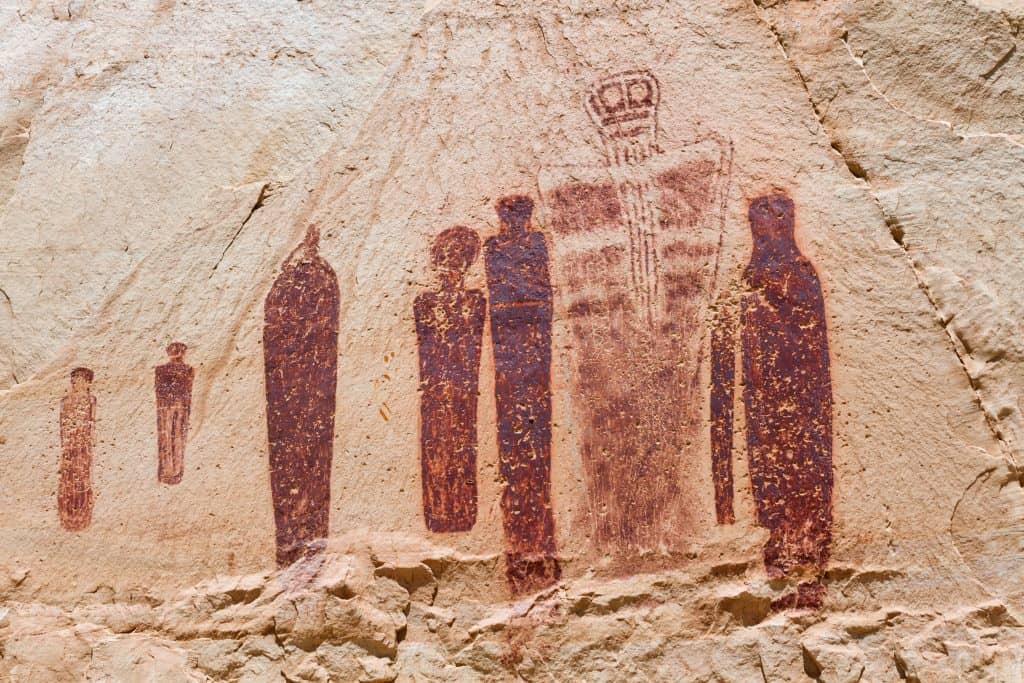
The subject matter of the Great Gallery pictographs is also unique. The figures depict a range of themes that are still not fully understood.
Some of the figures are thought to depict religious or spiritual beliefs, while others may be related to hunting or other aspects of daily life. The meaning behind the pictographs has been the subject of much debate among researchers, and the mystery surrounding the rock art only adds to its allure.
The Great Gallery pictographs are also considered to be among the best-preserved examples of rock art in the world as the dry, desert climate of Canyonlands National Park has helped to preserve the art for thousands of years.
Visitors to the park can hike out to view the Great Gallery and see the pictographs up close making it a coveted attraction for anyone interested in rock art or the history of the Southwest.
What to see instead of The Great Gallery
If you are not able to see The Great Gallery, there are numerous other pictographs in the Moab area.
- Courthouse Wash – Over the course of about three miles, you will find numerous petroglyphs and pictographs expressed by the Archaic, ancestral Puebloan, Fremont, and historic Ute cultures.
- Kane Creek Road – Over around 5.5 miles you will find a similar variety of pictographs and petroglyphs.
- Potash Road – This drive also offers numerous pictograph and petroglyph samples.
In our experience, many of these sites are best explored on four-wheel-drive vehicles. If you are looking for a specific site or age of marking, consider talking to the park rangers at the Canyonlands Visitor Center before you begin.
We love the booklet called “Moab Rock Art.” We purchased it at the visitor center, and it is helpful when exploring the pictrographs and petroglyphs of the region!
Another site you will likely enjoy in this region is “Newspaper Rock.” It is only about an hour south of Moab. It is easily accessible through some BLM land, and there is a parking area and pit toilet at the site.
It is truly amazing to see the density of carvings at this location. It is also our top pick for families that may have some members not as interested in rock expression as others!

Unfortunately, there has been some vandalism on the rock carvings at many of these locations. Be sure to stay as “hands-off” as possible to preserve this history for generations to come!
The Great Gallery pictographs in Canyonlands National Park offer a glimpse into the past and a chance to see some of the finest examples of rock art in the world.
